Why Voice Journaling Changes Everything
By RetroVoice Team · 2 min read
The Problem with Traditional Journaling
We've all been there — staring at a blank page, pen in hand, trying to force our scattered thoughts into coherent sentences. For many of us, the friction of writing is enough to abandon the practice entirely. Studies show that over 90% of people who start journaling quit within the first month.
The problem isn't a lack of willpower. It's that writing is an unnatural bottleneck for self-reflection. Our thoughts don't arrive as neat paragraphs. They come as fragments, emotions, half-formed ideas — and by the time we've wrestled them into written words, we've lost the raw feeling behind them.
Speaking Is Thinking
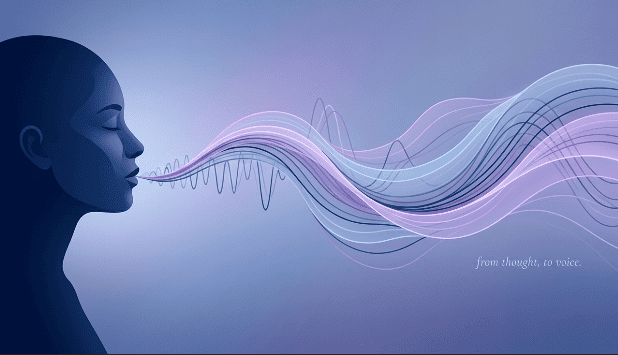
When you speak your thoughts, something different happens. The words flow closer to the speed of thought. You don't self-edit as heavily. You capture the tone, the hesitation, the excitement — all the nuance that gets lost when you filter through pen and paper.
Research from the University of Cambridge found that verbal reflection activates different neural pathways than written reflection, engaging areas of the brain associated with emotional processing and memory consolidation more effectively.

Where AI Comes In
Voice journaling on its own is powerful, but it has a challenge: raw voice recordings are hard to revisit. You can't skim a 10-minute recording the way you'd scan a journal page.
That's where AI changes the game. RetroVoice uses AI to:
- Transcribe your voice entries accurately in real-time
- Summarize key themes and insights from each session
- Track patterns across days, weeks, and months
- Surface connections you might have missed between entries
The result? You get the natural flow of speaking with the structured insights of the best journaling practices — without the effort of either.
Getting Started
The best journal is the one you actually use. If writing has never clicked for you, voice might be the key. RetroVoice is available on iOS with a 7-day free trial, so you can experience the difference yourself.
Your thoughts deserve to be heard — even if the only listener is you.